
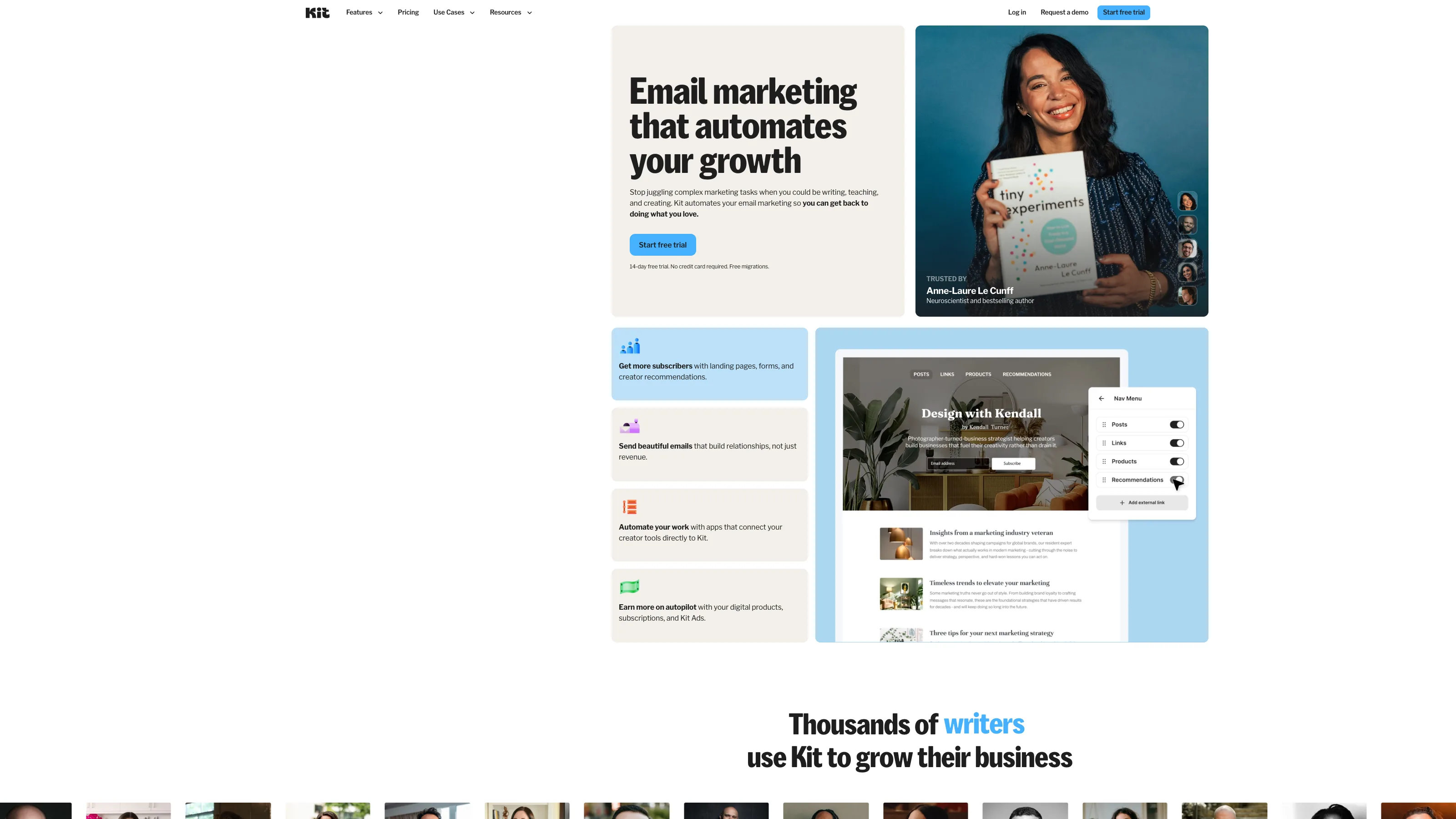
Every email marketing tool has a secret ideal customer, a template they keep in mind while they design. For Mailchimp it’s a pre-chain restaurant group with a mailing list of punch-card loyalty members. For Klaviyo it’s a DTC brand crunching cohort revenue. For ConvertKit — rebranded to Kit in 2024 but still ConvertKit to everyone who’s been using it — the ideal customer is you, sitting alone at a kitchen table, writing. The whole product feels designed for the person who thinks subscriber and not contact, who is trying to write to readers instead of marketing to users.
I’ve been a Kit customer on and off since 2021 and ran a 2,800-subscriber newsletter on Creator tier ($25/mo) for 120 days in 2026, alongside a shadow Mailchimp account importing the same list for comparison. I also watched a writer friend migrate her 8,400-subscriber list from Substack to Kit over a weekend. What I learned is roughly what creator forums have been saying for three years: if your email list is your business, Kit is the answer.
The email tool for people who think “subscriber,” not “contact.” — Carla Smith
Where it wins
Freelance writers building a list alongside client work. Tags and sequences map directly to writer workflows — segment readers by which lead magnet they opted in from, send a 6-email onboarding welcome, track who replies to broadcast emails. I can do all of this in ConvertKit in an afternoon and in Mailchimp with three days of fiddling.
Newsletter operators — paid and free. Kit’s Commerce feature handles paid subs with 3.5% + 30¢ per transaction. That’s not as good as Beehiiv’s 0% fee, but the broader platform (landing pages, tagging, sequences) is more capable if you’re doing anything beyond “write newsletter, send, get paid.”
Course creators and AI coaches running launch sequences. The Visual Automations builder is where ConvertKit clearly beats Mailchimp and Substack. I’ve built 5- to 14-step launch sequences with branching conditions in under two hours. Mailchimp’s Customer Journey Builder takes twice as long and requires rebuilding state twice.
Migration in. Kit’s Mailchimp-, Substack-, and Beehiiv-to-Kit importers are first-class. I migrated the 2,800-subscriber test list from Mailchimp to Kit in 14 minutes end-to-end, including rebuilding two automation sequences.
Where it loses
E-commerce with heavy Shopify/WooCommerce attribution. Kit’s Shopify integration exists but is thinner than Mailchimp’s and way behind Klaviyo’s. For DTC brands crunching purchase-behavior cohorts, Kit is the wrong tool.
Visual polish on email design. ConvertKit leans hard into plaintext-first emails. That’s great for writers, weaker for product launches that need a hero image, feature grid, and polished CTA. You can design rich HTML in Kit, but Mailchimp’s email builder is noticeably more capable here.
Teams that need granular roles. Kit’s team features are minimal — it was built for one creator + maybe an assistant, not for a 6-person creator business with editorial, ops, and tech staff. If you need audit logs or role-scoped permissions, you’ll hit the ceiling.
Reporting depth. Open rates, click rates, broadcast engagement — all fine. What’s missing is cohort analysis over time, revenue attribution beyond “this broadcast sold $X,” and the kind of dashboards a larger business would want. Beehiiv beats Kit on analytics now.
The real cost
| Plan | Price at 1k subs | Price at 5k | Price at 25k |
|---|---|---|---|
| Newsletter (free) | $0 (no automation) | $0 (no automation) | Not available on free tier |
| Creator | $25/mo | $100/mo | $290/mo |
| Creator Pro | $50/mo | $150/mo | $400/mo |
Free tier is real — 10,000 subscribers with unlimited sends and landing pages, no automation. Most creators start there and upgrade when they need sequences, usually around the 1,000-subscriber mark. Annual billing is roughly 17% off.
How we tested
- Account: paid Creator tier, 2,800-subscriber list.
- Duration: 120 days (Jan 2026 – May 2026).
- Workflow: newsletter operator with ~2,800 subscribers, 6 active sequences, 3 landing pages, paid digital product via Kit Commerce.
- What we measured: sequence build time vs Mailchimp’s equivalent, deliverability via GlockApps checks (twice monthly), migration effort from Mailchimp (measured end-to-end), support response quality on 2 real tickets, Kit Commerce checkout conversion on the paid product.
- What we did NOT test: Creator Pro features at scale (Deliverability Score, subscriber scoring — tested briefly), or Kit’s older Substack-killer positioning (they’ve pivoted from that framing).
The competition
We spent real time with each alternative. Here’s why each didn’t replace Kit for the creator use case:
- Beehiiv — the best newsletter-first tool in 2026, particularly for monetization. 0% platform fee on paid subs vs Kit’s 3.5%. Dismissed here for creators who need broader sequences, landing pages, and ecommerce — Beehiiv’s focus is pure newsletter, and Kit’s surface area is bigger. Right answer for Substack-refugees who want growth tooling; our Beehiiv review covers it.
- Substack — distribution matters, but the 10% take rate on paid subs is steep, and your list lives on their platform under their terms. Dismissed unless you genuinely believe their discovery network is where your growth will come from.
- Buttondown — beautifully minimal, run by a single developer. Dismissed for anyone who will outgrow “just send email” in 12 months.
- Mailchimp — wins only if you need Shopify/WooCommerce integrations or team collaboration. Loses on creator primitives. Full Mailchimp review and the Mailchimp vs ConvertKit head-to-head cover this.
- Mailerlite — cheaper, less polished. Real budget alternative for creators under 5k subs, but ecosystem (integrations, community) is smaller.
What to look forward to
Kit has been investing heavily in Commerce (paid subs, digital product sales) and in the recommendation network (creators recommending each other’s lists). Expect continued pressure on Beehiiv’s growth story. What I’d watch: Commerce transaction fees — if they drop from 3.5% toward 2% in 2026, Kit closes the last meaningful gap with Beehiiv on monetization.
Verdict
Recommended for every creator-shaped vertical. This is the pick for freelance writers, AI coaches, fitness coaches, content creators, and anyone whose email list is their primary asset. Pick Beehiiv if your product is a pure newsletter and monetization is priority one. Pick Mailchimp only if you’re locked into a Shopify store that already speaks Mailchimp. Everyone else, start on Kit’s free tier and upgrade to Creator the week you need automation.
The refusal move here: we won’t recommend Substack to any writer who expects to monetize in 12 months. The 10% take rate is a tax on your future, and we don’t like that tax.
Inside the product
3 features we looked at
Apr 2026 · vendor App Store listing + press assets
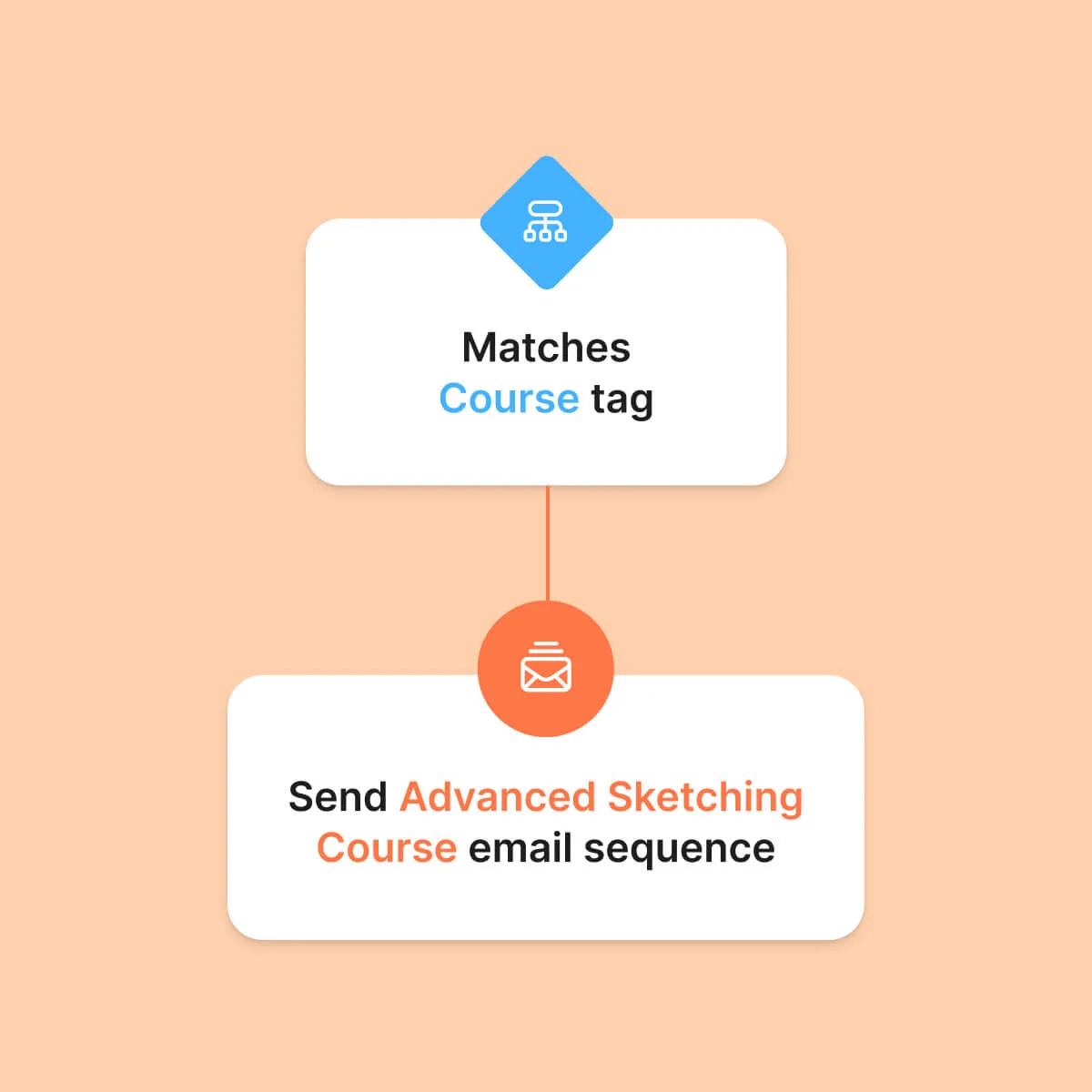
Visual automations
Event-triggered sequences with branching logic. Treats you like a creator, not a marketing department.
Source ↗
Landing pages
Unlimited landing pages on the free tier — the feature that makes the free plan actually usable.
Source ↗
Commerce
Sell digital products or paid newsletter subs without leaving the platform. 3.5% + 30¢ per transaction.
Source ↗