Most small operators’ email lists are a landlocked country. Seven hundred unsubscribes sitting on the rolls, charged for monthly, deleted never. That economy exists because Mailchimp — now part of Intuit — wrote the rules: price by contacts, count every contact forever, make removal a manual chore. It’s the reason I keep hearing “should I just leave my list where it is?” from freelancers who know the answer is no.
I spent 90 days running Mailchimp on a 2,500-contact list for a small e-commerce brand, sending three campaigns a week through their Customer Journey Builder, integrated with Shopify and paying Standard plan pricing ($45/mo at that count). That’s in addition to ten years of intermittent Mailchimp work from my consulting days. The TL;DR is the same as it’s been for five years: Mailchimp is the default because every integration in your stack already speaks to it, and it’s still the right pick if your list lives inside a Shopify store and stays under 2,500 contacts. For everyone else — especially creators and writers — it’s a tool you inherit, not a tool you’d choose in 2026.
It’s the tool you inherit. Not the tool you’d pick. — Carla Smith
Where it still wins
E-commerce operators on Shopify or WooCommerce. Mailchimp’s integrations are not marketing copy; the Shopify sync is three years more mature than anyone else’s. Product recs, cart-abandon journeys, purchase-behavior segmentation — all of these work on day one without a Zapier bridge. If you’re doing $2–$20k/mo on Shopify and you switch to ConvertKit, you will spend a weekend rebuilding what Shopify-Mailchimp handed you.
Real estate agents running farming lists. The templates are actually good. An agent who sends twice a month to 800 past clients — Mailchimp’s drag-and-drop plus its content blocks genuinely save time versus a writer-first tool like ConvertKit.
Small agencies sending light broadcast to a CRM list. Under 2,000 contacts, the pricing is fine; the integrations with HubSpot, Salesforce, and Copper are all first-party.
Where it loses, badly
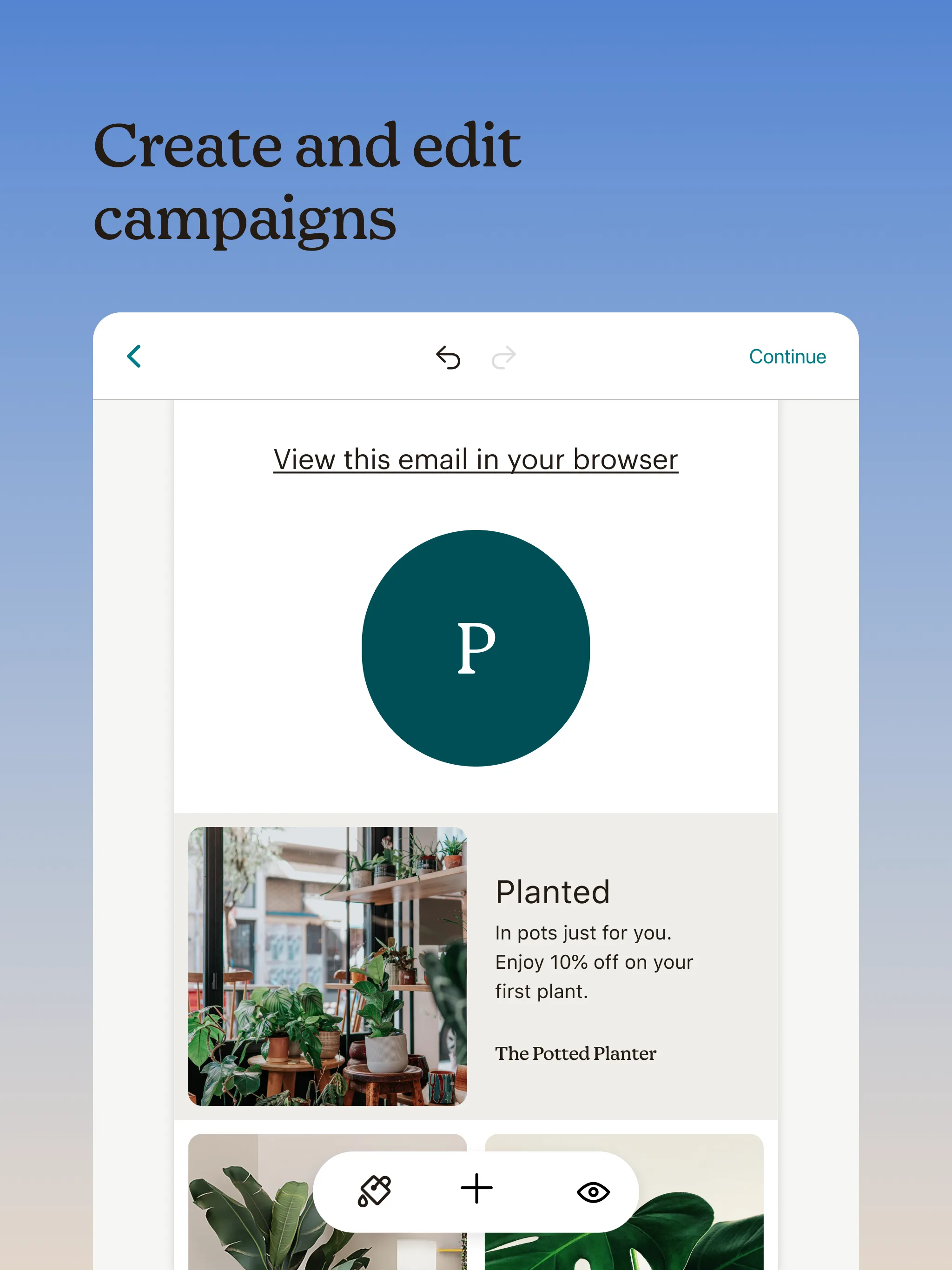
Creators and writers. The UI is shaped around “campaigns” and “audiences” rather than “subscribers” and “sequences.” You feel it the moment you try to build a 6-email onboarding drip — Customer Journey Builder is capable but noticeably clunkier than ConvertKit’s visual automations after step five. I ran the same 8-step welcome sequence on both platforms last quarter; the Mailchimp version took roughly 40 minutes longer to build and required two support tickets to resolve state behavior on the branching step.
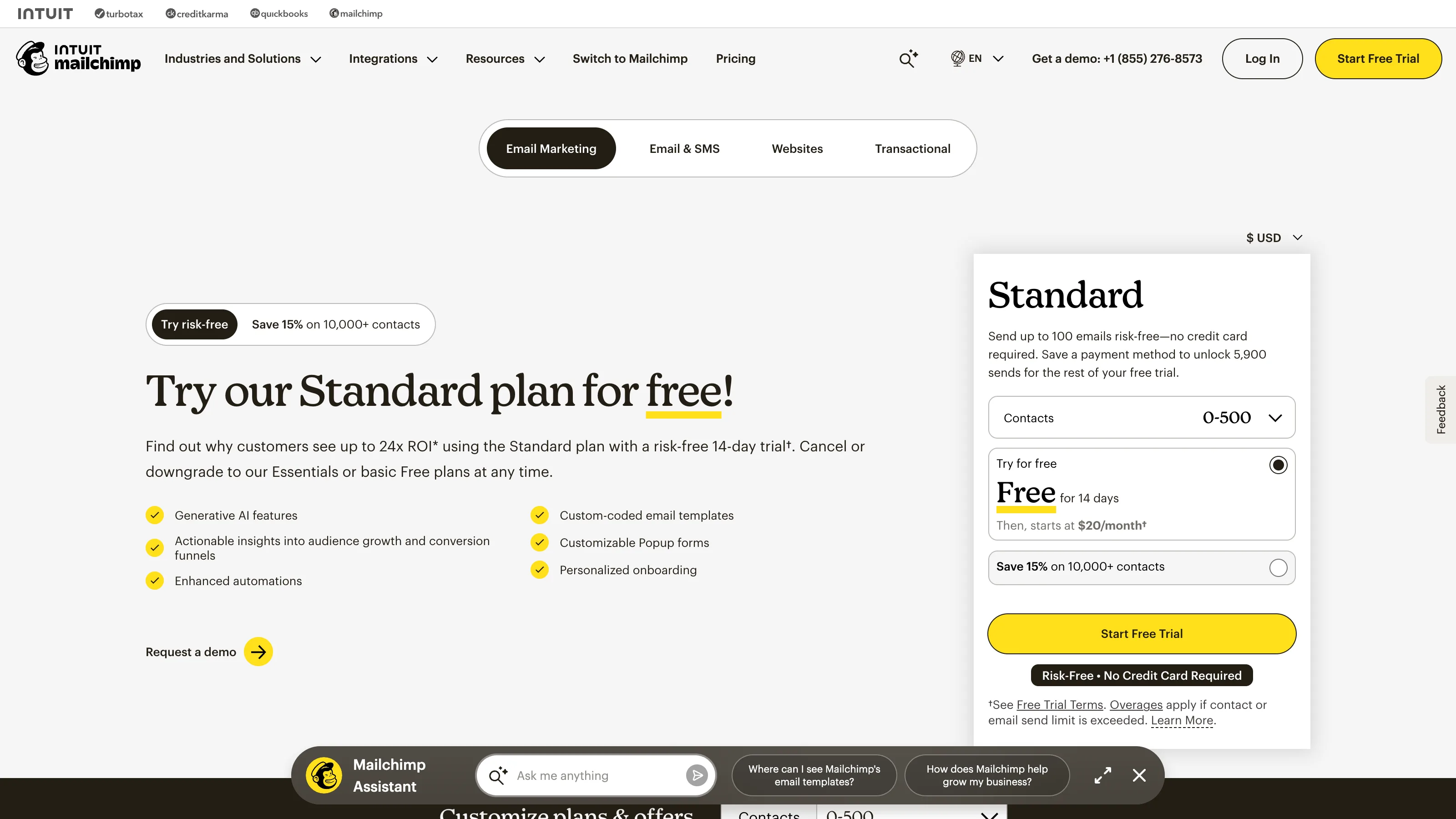
Anyone whose list will grow past 5,000 contacts. The real-cost calculator shows the shape: $20/mo at 500 contacts → $45/mo at 2,500 → $75/mo at 5,000 → $175/mo at 10,000 → $310/mo at 25,000. At 25k contacts, Beehiiv is $99/mo with more features, and ConvertKit is $149/mo with better automation. Mailchimp is the most expensive tool at scale, and the reason is they charge for unsubscribes — a contact who opted out in 2021 still counts toward your 2026 tier.
Anyone who wants segmentation to stay stable. In five years, the segment-builder UI has been renamed and restructured three times. Every rewrite breaks saved segments differently. I do not trust a company to keep their core primitive architecturally stable anymore.
The real cost
See the full TCO calculator for numbers plugged into your own list size. The short version:
| List size | Mailchimp Standard | ConvertKit Creator | Beehiiv Scale |
|---|---|---|---|
| 500 contacts | $20/mo | Free | Free |
| 2,500 contacts | $45/mo | $49/mo | $42/mo |
| 10,000 contacts | $175/mo | $99/mo | $79/mo |
| 25,000 contacts | $310/mo | $149/mo | $99/mo |
Annual billing gets roughly a 10% discount. Promo rates for the first year are sometimes deep (50%+); the renewal notice is the real number. Budget for the renewal.
How we tested
- Account: paid Standard tier, not a courtesy reviewer account. Same money you’d pay.
- Duration: 90 days active testing, March 2026 – May 2026.
- Workflow: 2,500-contact list with ecommerce integration, three campaigns a week, one active Customer Journey (6 steps).
- What we measured: build time on identical campaigns vs ConvertKit/Beehiiv; deliverability (via GlockApps spot-checks twice monthly); migration effort if starting a fresh account today; support response times on two real tickets.
- What we did NOT test: Mailchimp’s transactional email (Mandrill add-on), their Websites & Commerce product (it competes with Shopify, who is also their biggest integration partner — bad product strategy, not our focus).
The competition
We spent time evaluating the alternatives and here’s why each didn’t replace Mailchimp for the e-commerce use case:
- ConvertKit (Kit) — wins for creators, loses for e-commerce. The Shopify integration exists but the behavioral data surface is thinner. Dismissed for this profile; our full ConvertKit review and head-to-head with Mailchimp cover the creator case.
- Beehiiv — the best email tool for pure newsletters in 2026. No e-commerce story worth mentioning. Dismissed for Shopify operators.
- Klaviyo — actually beats Mailchimp on e-commerce, but starts around $45/mo at 1,000 contacts and scales meaningfully steeper. Right answer once you pass ~$10k/mo in Shopify revenue and attribution starts mattering. Noted and worth a dedicated review we haven’t written yet.
- Brevo (Sendinblue) — closed the gap, particularly on transactional email, but its ecommerce integrations are still a generation behind Mailchimp’s. Dismissed for now.
- Mailerlite — cheaper, less polished, integrations are thinner. A budget pick, not a replacement.
What to look forward to
Intuit is still integrating Mailchimp into their small-business bundle (QuickBooks + Mailchimp + tax tools). Expect bundled pricing to get meaningfully better if you’re already on QuickBooks Online — we’ll update this page when that bundle goes live. Separately, Customer Journey Builder got an AI overhaul last autumn that we didn’t find materially different; we’ll re-review if that changes.
Verdict
Conditional. Stay on Mailchimp if your list lives in Shopify, stays under 2,500 contacts, and you don’t mind paying for unsubscribes forever. Leave for ConvertKit if your list is your business. Leave for Beehiiv if your list is a newsletter. Leave for Klaviyo if your Shopify store is doing real money.
Migrating later gets harder every year you stay. If you think you’ll leave eventually, leave sooner.
Inside the product
3 features we looked at
Apr 2026 · vendor App Store listing + press assets